A research-led foundation
At our child care and kindergarten we use research and data to shape how we plan for the children who attend our service. Whilst there are facets of many theorists, some are more predominant than others.
We believe that children are born with an innate need to form attachment, consistent with Bowlby's attachment theory. Our team make it a priority to form relationships with children and their families to offer them the best opportunity to thrive whilst at our service.
Our curriculum is based on Piaget's cognitive child development theory, observing and recording children at each stage of their development. Observations then form the foundations for our programs in each room, working on a rotational basis to ensure all children are challenged and planned for each month.
The Stages of Learning
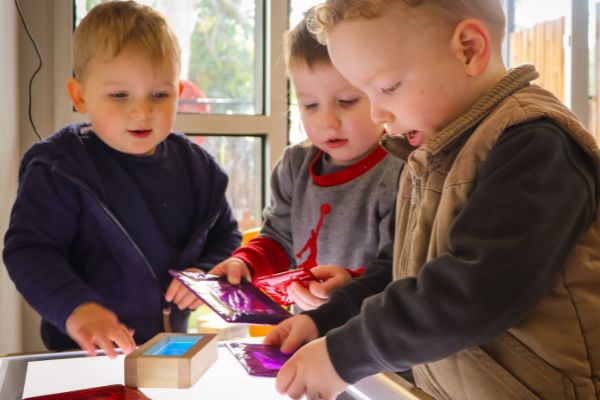
In the sensorimotor stage, birth to two years, babies start to build their understanding of the world through their senses — touching, grasping, watching and listening. They also begin to develop a sense of object permanence, meaning they understand that objects exist even when they cannot see them.
In the preoperational stage, two to seven years, children develop language and abstract thought. This means they can think about concepts and ideas that are not physical. They also begin to engage in symbolic "pretend play", drawing pictures and talking about things that happened in the past.
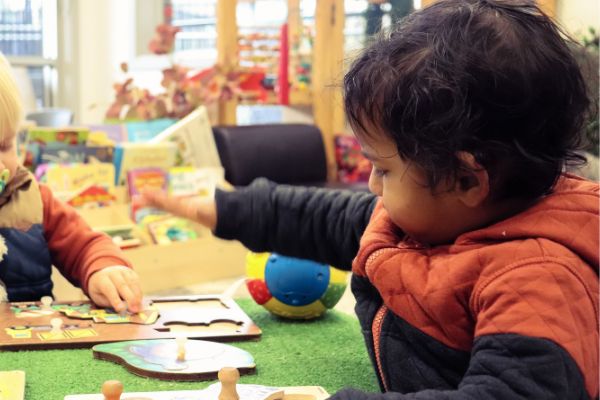
Our well-resourced learning environments are based on Vygotsky's Sociocultural Theory, encouraging children to learn through hands-on experiences, with our qualified team supporting them to progressively learn and increase their skills and understanding of the world they live in.
A Sense of Belonging
A sense of belonging is what we want for each child, therefore we provide some permanent play spaces in each room to create consistency and predictability.
We believe that the learning environments should reflect the learning and display the children's work for them and their families to see. This provides the vibrant colour to each environment.
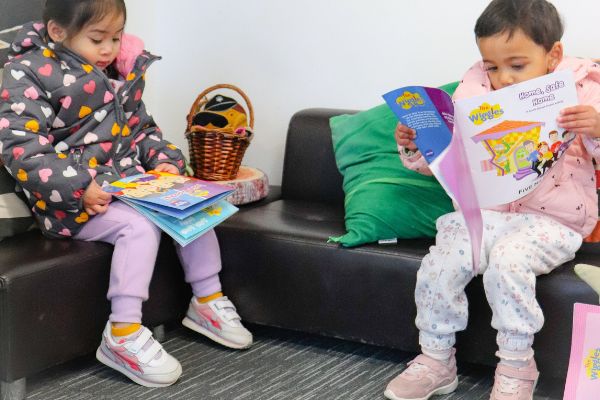
Child Care and Kindergarten Qualifications
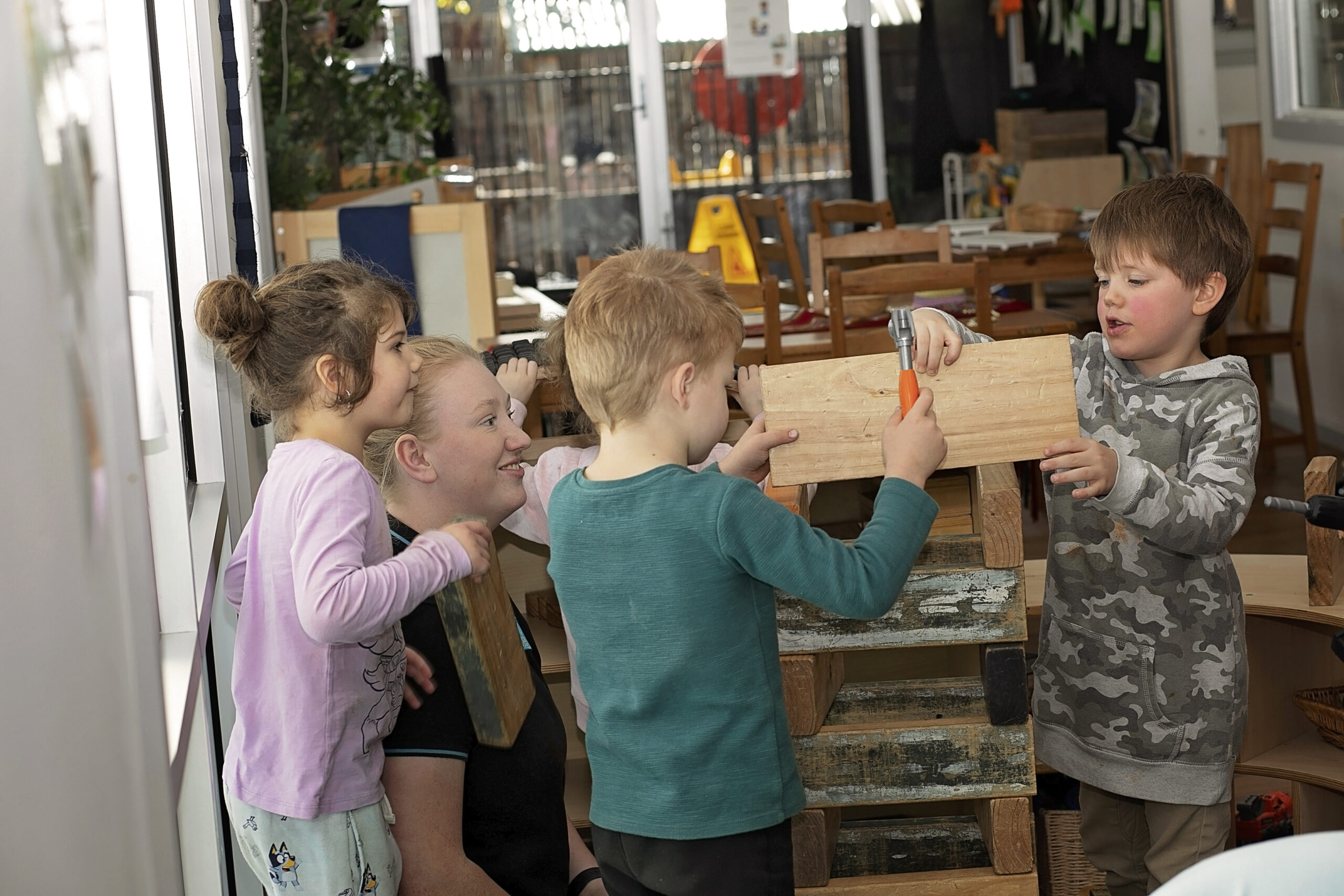
Each learning environment has a Diploma Qualified educator leading the team and permanent qualified Assistant Educators. We believe that there are multiple teachers in each environment and our planning structure reflects this — planning time is allocated to each team every week and they decide how this will be shared out.
It is a requirement that all educators working with children have obtained either their Certificate III in Children's Services, their Diploma of Children's Services, or are trainees working towards their qualifications. All trainees are paired with a mentor in our team to help guide them whilst they are studying.
Meet the team behind our curriculum on our Educators page.
How old does my child need to be to start at Meraki?
Meraki Early Learning Centre offers child care, kindergarten and educational programs to children aged six weeks to six years old. Our stimulating environments and qualified educators cater for the most curious of minds, adapting our child-led programs to each stage of their individual development.
Frequently Asked Questions
Common questions families ask about our curriculum, the theorists behind it, and what each stage of learning looks like at Meraki.
What educational framework does Meraki follow?
Our curriculum is delivered within the Australian Early Years Learning Framework (EYLF) and Victorian Early Years Learning and Development Framework (VEYLDF). Within those, our planning is informed by Bowlby's attachment theory, Piaget's stages of cognitive development and Vygotsky's sociocultural theory — so children are nurtured emotionally, challenged cognitively and supported socially.
Why does Meraki use Bowlby, Piaget and Vygotsky?
Each theorist informs a different part of the day. Bowlby reminds us that secure attachments with familiar educators are the foundation for learning. Piaget gives us a map of how children think at different ages, so experiences are pitched to the right stage. Vygotsky reminds us that children learn through interaction — with peers, educators and a rich environment — which shapes how our rooms are set up and how educators engage.
What does the sensorimotor stage (birth–2 years) look like in our rooms?
For babies and toddlers, the day is full of sensory exploration: treasure baskets, water and sand play, mirrors, music, textures and lots of one-on-one time with their primary educators. Routines like sleep, feeding and nappy changes are unhurried and used as opportunities for connection, language and trust-building.
What does the preoperational stage (2–7 years) look like?
Older toddlers and kindergarten children dive into pretend play, storytelling, drawing, early literacy and numeracy, science experiments, nature investigations and group projects. Educators extend children's ideas, introduce new vocabulary and gently challenge thinking through open-ended questions.
How are programs planned and how often do they change?
Educators observe and document each child's interests and development, then plan experiences that build on what they're showing us. Programs work on a rotational basis and are reviewed monthly, so every child is being intentionally planned for and challenged across all learning areas.
Is the program child-led or educator-led?
Both. Children's interests, questions and play drive much of what appears in the room — but educators are intentional too, weaving in literacy, numeracy, science, the arts, sustainability and wellbeing. The balance is sometimes called 'intentional teaching within a play-based program'.
How do you know my child is actually learning and progressing?
Educators record observations, work samples, photos and learning stories that map to the EYLF outcomes. These are shared with families through your child's digital learning journal and at parent-educator chats, so you can see exactly how your child is growing across communication, identity, wellbeing, community and learning dispositions.
How does the curriculum support school readiness?
School readiness at Meraki is much broader than letters and numbers. Through our kindergarten program children develop independence, resilience, self-regulation, problem-solving, social skills and a love of learning — alongside early literacy and numeracy. These are the foundations that help children thrive when they start school.
How do educators support children's sense of belonging?
Each room has consistent, familiar educators and permanent play spaces so children always know what to expect. Children's own work is displayed throughout the room, family photos are welcomed, and cultural backgrounds are celebrated — all of which help every child feel this is a place that belongs to them.
How do you cater for children with additional needs?
We work in close partnership with families and any allied health professionals (speech, OT, early intervention) to build individual learning plans. Programs, environments and routines are adapted so every child can participate meaningfully alongside their peers.
Are educators qualified, and who leads the program in each room?
Every learning environment is led by a Diploma-qualified educator with permanent qualified Assistant Educators. Trainees working towards their Certificate III or Diploma are paired with a mentor. Our kindergarten program is led by a Bachelor-qualified Early Childhood Teacher.
How can families be involved in the curriculum?
Families are a vital part of the program. We share daily updates and learning journals, invite parents to share their family's stories, culture and skills with the room, and welcome feedback at any time — your insights about your child shape what we plan next.
Have another question? Get in touch with our team.